Truth or Dare: Party Time
- 3.1
- Rating
- 1.00M
- Installs
- Free
- Price

 Analysis by App-foxy
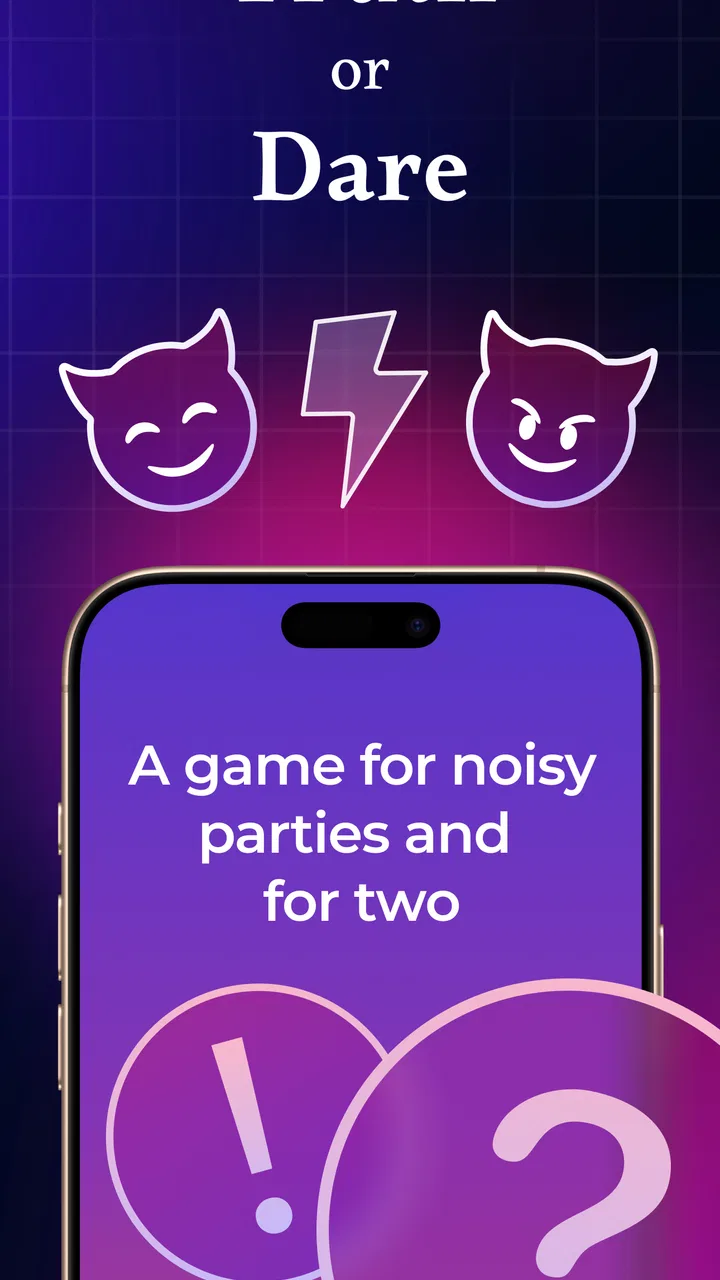
I downloaded Truth or Dare: Party Time expecting a quick group game, and that is exactly where it makes the most sense. It is a free board-style party game from Wheel: Entertainment, built around the familiar truth-or-dare format rather than a complicated rule system. The appeal is immediate: hand a phone around, choose a prompt, and let the people in the room create the entertainment.
That simplicity is also the reason to look closely before installing. This is not a strategy board game, a solo challenge app, or a carefully structured campaign. It is a social prompt generator for friends who are already willing to joke around, answer personal questions, and accept occasional awkwardness. In my experience, its success depends less on the app itself than on whether the group understands the mood it is trying to create.
How the game works in a real group
The basic idea is easy to explain to anyone: players take turns choosing or receiving a truth question or a dare, then respond in front of the group. The store description points toward humorous challenges and adult-leaning questions, and the Teen content rating is an important signal that this is not designed as a children’s game. I would treat the rating seriously when deciding who is invited to play.
You May Also Like

 Blood Strike: 2.5 Anniversary
Blood Strike’s Loadouts Turn Every Drop Into a Tactical Gamble
A close look at Blood Strike’s custom loadouts: how fast access to signature weapons reshapes its battle royale rhythm, rewards preparation, and narrows the gap between fights.

 Pandora - Music & Podcasts
Pandora’s Music Is Easy to Start, but Harder to Recover
Pandora’s strength is its low-effort path from a seed to a station. Its weak spot is how much confidence it asks you to place in connection, setup, and quiet recovery.

 8 Ball Pool
 Is Built on Rivalries, Rematches, and Routine
A close look at the rivalries, rematches, shared routines, and unanswered safety questions that turn a quick pool match into a persistent mobile community.

 Samsung Music
’s Quiet Strength Is Playing What You Already Own
Its reach comes less from spectacle than from dependable access to a personal library. That simplicity is both the app’s strongest retention engine and its ceiling.

 AccuWeather: Weather Radar
AccuWeather Review: A Quick, Clear Forecast for Everyday Decisions
For everyday plans, the best forecast is the one you can understand quickly. AccuWeather makes rain timing, radar, and local conditions easy to act on, with a few trade-offs.

 Hill Climb Racing
Why Hill Climb Racing Still Turns Crashes Into One More Run
A tiny car, a bumpy hill and one more upgrade: Hill Climb Racing keeps resurfacing because its simple chaos makes every near-miss feel personal.
More From Our News Desk



A realistic use case is a quiet evening with friends where conversation has started to slow down. Instead of searching for questions online, one person opens the game and passes the phone around. A prompt can break the silence quickly, especially when the group already knows one another well enough to laugh without every answer feeling forced. It can also work at a casual gathering where people want an activity that requires almost no preparation.
The phone-based format keeps the rules light, but it creates a practical responsibility for the group. Before starting, I recommend agreeing on a simple pass rule. Anyone should be able to skip a question or dare without having to justify the decision. That is not a feature I would assume the app enforces; it is a group habit that makes this kind of game more comfortable and prevents a joke from turning into pressure.
Another useful habit is to separate the people who enjoy public embarrassment from those who prefer conversation. A truth question may be entertaining for one player and uncomfortable for another, while a dare can be harmless in one room and inappropriate in another. The best sessions are not the ones where everyone accepts everything. They are the ones where the group adjusts the tone before the first prompt appears.
What the free download really means
The game is free to install, so the initial cost is easy to understand: you can try the core experience without paying at the download stage. That makes it less risky than a paid party title that asks everyone to commit before discovering whether the prompt style suits the group.
There are optional in-app purchases priced from $1.99 to $21.99 per item. I would therefore judge the free access first and regard any purchase as something to consider only after the group has used the game enough to know it adds value. The presence of a purchase range does not, by itself, tell me that spending is necessary for a good evening, so I would not buy anything immediately just because a prompt feels repetitive.
For a group organizer, the most sensible approach is to install it in advance, test the opening flow privately, and decide whether the free experience gives enough variety for the people who will actually play. If it does, there is no reason to turn a casual gathering into a shopping decision. If the group uses it repeatedly and wants more content, the optional items can be judged as entertainment spending rather than as a requirement to unlock the idea of the game.
This distinction matters because the value here is social. You are not paying for a deep progression system or a long solo adventure. You are paying, if you choose to spend, for additional material that may help keep a familiar party format fresh. That can be worthwhile for regular hosts, but it is harder to justify for someone who only wants a one-night distraction.
Where the entertainment value comes from
The strongest part of this game is the low barrier to entry. There is no lengthy tutorial to explain, no board to set up, and no complicated scoring system to remember. The prompts do the work while the players supply the personalities. That makes it suitable for mixed groups where not everyone enjoys traditional board games.
I also like the way this format creates different kinds of participation. A confident player may enjoy performing a dare, while a quieter person may contribute more through a surprising truth. Someone who normally avoids competitive games can still take part because the focus is on reactions and stories rather than winning. That makes the app more flexible than a conventional board game with a fixed objective.
Its value is especially clear when the group has run out of conversation topics but does not want a serious game night. A prompt can lead to a funny memory, an unexpected confession, or a playful argument. The app is not generating the whole experience; it is providing a nudge. The people around the phone remain the real content.
There is also a useful difference between playing with close friends and playing with acquaintances. With close friends, the game can encourage stories that would not otherwise come up. With newer acquaintances, it can act as an icebreaker, but only if the prompts remain within a comfortable boundary. I would start with a calmer round rather than immediately choosing the most embarrassing option, because early pressure can make a group disengage before the game has a chance to work.
Practical ways to get more from each round
One of my preferred ways to use a truth-or-dare game is to create a soft progression without pretending the app has a formal mode for it. Begin with questions that reveal preferences or harmless habits, then move toward more personal topics only if everyone is clearly enjoying the exchange. Save dares that involve movement or performance for a space where people can act safely and without disturbing others.
A second tip is to appoint a temporary host for the phone. Passing the device randomly can interrupt the flow, especially when players are laughing or telling a story. The host can hand it to the next person, read a prompt aloud, and keep the turn moving. This does not change the game’s rules; it simply prevents the device from becoming the center of attention.
A third tip is to use the prompts as conversation starters rather than treating them as commands. If a question produces an interesting answer, let the player explain it before moving on. The app becomes much more valuable when the group allows a good prompt to develop into a real conversation. Rushing through every turn may create activity, but it can also make the game feel like a checklist.
For a small gathering, I would avoid making every turn a public performance. Mix truths and dares so the quieter players have an easier entry point. For a larger group, keep answers brief enough that nobody waits too long. These adjustments are simple, but they address a weakness shared by many prompt-based party games: the experience can lose energy when the format is not adapted to the room.
Limitations I noticed before recommending it
The first limitation is that the game depends heavily on the group’s sense of humor. A prompt that seems hilarious to one circle may feel childish, intrusive, or simply uninteresting to another. Because the app’s appeal comes from its questions and challenges, a mismatch in tone can make the whole experience feel weaker than the free price suggests.
The second issue is replay value. Truth-or-dare games can remain enjoyable for a long time when the prompts feel varied, but repeated sessions naturally expose familiar patterns. If your friends play party apps every weekend, you may notice repetition sooner than an occasional player. Optional purchases could be relevant for someone who wants more material, but I would make that decision only after seeing how quickly the available content starts to feel familiar.
The third trade-off is privacy within the group. The game is designed for shared play, so it is not the right choice for someone who wants a private, reflective question app. I would also avoid using it with people who are likely to record, share, or mock another player’s answer. The app can start a conversation, but it cannot control how players treat one another afterward.
The Teen rating also narrows the audience. I would not present this as a family game for young children, and I would check the room carefully before using it at a mixed-age event. A school, workplace, or formal community gathering may be better served by a deliberately moderated icebreaker activity with questions selected in advance.
There is a further practical limitation for people who want a competitive board experience. This title is not where I would look for tactical decisions, resource management, a campaign, or a meaningful winner. If your group enjoys planning several turns ahead, the usual strategy board games will offer much more depth. This app wins through immediacy, not complexity.
How it compares with familiar alternatives
Compared with a physical truth-or-dare card deck, the main advantage is convenience. A phone is easier to carry than a box, and there is no need to shuffle or keep cards together. The physical deck may still be better for a screen-free evening, for groups that dislike sharing a device, or for hosts who want complete control over which questions enter the game.
Compared with inventing questions yourselves, the app removes the pressure of one person having to be creative all night. That is valuable when the group wants to participate equally. On the other hand, homemade prompts can be much more personal and can match the group’s boundaries exactly. If your friends already have a long list of funny questions, the app may add less than it would for a group that needs a starting point.
Compared with larger party-game collections, this one is more focused. A broad party app may offer drawing, trivia, wordplay, or voting, which gives a group more ways to recover when one activity becomes stale. Truth or Dare: Party Time is a better fit when everyone specifically wants personal questions and playful challenges rather than a menu of unrelated mini-games.
That focus is both its identity and its limitation. I would choose it for a spontaneous hangout, a sleepover involving appropriately aged players, or a relaxed evening with friends who enjoy teasing one another. I would choose a conventional board game instead when the group wants structure, balanced competition, or an activity that does not depend on personal disclosure.
Who should install it
I think the best audience is a group of friends that wants something immediate, informal, and easy to explain. It is particularly useful for the person who often hosts but does not want to prepare a full game night. The free entry makes it reasonable to keep available for occasional gatherings, even if it is not used every week.
It can also suit players who normally avoid board games because they dislike rules or losing. Here, participation is more important than score, and the memorable moments usually come from the answers and reactions. Still, that does not mean every shy player will enjoy it. Someone who dislikes being put on the spot may prefer a cooperative game or a conversation deck where questions can be selected privately.
I would skip it if you are looking for a polished solo experience. The app’s premise needs other people, and its entertainment value drops sharply when there is no audience for a joke or answer. I would also skip it for a group that cannot agree on boundaries, because no party prompt is worth creating resentment.
The app has reached over a million installs, which shows that this style of casual group game has a broad audience, but popularity does not remove the need to match it with the right people. Its average rating is 3.1, so I would approach it as a functional, situational party tool rather than assuming it will impress everyone. That rating fits my overall view: the concept is accessible, but the quality of a session depends greatly on prompt variety and group chemistry.
Device details and my verdict
Wheel: Entertainment lists the current version as 1.1.2, with support beginning at Android 7.1. The release date was June 9, 2022, so this is an established title rather than a brand-new experiment. Those details matter mainly for compatibility: anyone using an older Android device should check that the operating system meets the requirement before planning a party around it.
My recommendation is straightforward: install it if you want a free, low-preparation way to get friends talking and laughing, and decide about optional purchases only after you have tested the free experience with your own group. The app delivers its best value when nobody expects a deep game and everyone agrees that skipping an uncomfortable prompt is acceptable.
Truth or Dare: Party Time is not the right replacement for a strategic board game, a child-friendly family title, or a carefully moderated workplace activity. It is better understood as a portable source of prompts that can turn an ordinary gathering into a more interactive one. For the right friends, that is enough to make it worth keeping installed; for everyone else, a physical deck or a different party-game format may be the wiser choice.
FAQs for Truth or Dare: Party Time
01What is Truth or Dare: Party Time, and how is it played?
Truth or Dare: Party Time is a social party game designed for groups of friends, couples, or family members. Players take turns choosing between answering a personal question honestly or completing a dare. The app provides ready-made prompts, helping everyone start quickly without preparing cards or questions. Gameplay is generally simple, casual, and focused on conversation, humor, and group interaction.
02Is Truth or Dare: Party Time suitable for children and teenagers?
Suitability depends on the selected content, the players’ ages, and the version of the app available on your device. Truth-or-dare games can include embarrassing, personal, or mature questions and challenges, so adults should review the age rating and available categories before playing with younger users. It is also important to skip any prompt that makes a participant uncomfortable.
03Can I play Truth or Dare: Party Time offline?
The core party experience may be usable without a constant internet connection if the questions and dares are already included in the application. However, some features—such as advertisements, updates, purchases, online content, or analytics—may require connectivity. Before organizing a game in a place with poor reception, open the app once and test the main categories to confirm what works offline.
04Does Truth or Dare: Party Time include inappropriate or adult content?
The app may offer different levels or categories of questions and dares, and some prompts can be personal, romantic, embarrassing, or intended for mature audiences. Users should check the store age rating, read the app description, and review category settings before starting. Players should always agree on boundaries, avoid dangerous challenges, and remember that nobody should be pressured to participate.
05Is Truth or Dare: Party Time free to download, and does it contain ads or purchases?
Truth or Dare: Party Time may be available as a free download, but free versions commonly support development through advertisements, optional purchases, or premium content. The exact pricing and available features can vary between Android and iOS and may change after updates. Check the relevant app store listing before downloading, especially if you want an ad-free experience or additional question packs.
Pros
- Large selection of classic truth questions and dares
- Simple interface makes it easy to start a party quickly
- Works well for groups of different ages and personalities
- Rounds can be customized for a more personal experience
- Useful icebreaker for parties
- sleepovers
- and casual gatherings
Cons
- Some dares may feel repetitive after several rounds
- Content may not suit younger players without adult supervision
- Requires players to feel comfortable sharing personal answers
- Limited appeal if you usually play with the same small group
- Some features or content may depend on ads or in-app purchases

Truth or Dare: Party Time
Gallery